
Find Colorado Divorce Decree Records
Colorado divorce decree records are kept by District Courts in each of the 64 counties. These decrees finalize a dissolution of marriage and contain custody terms, property division, and support orders. You can search for divorce decrees through county District Courts, the Colorado State Archives for older cases, or use third-party databases like CoCourts.com to find case information. Colorado does not maintain a statewide divorce decree database, so each county handles its own records independently.
Colorado Divorce Decree Quick Facts
Where Colorado Divorce Decrees Are Kept
District Courts in Colorado handle all divorce cases. Each county has its own court that files, hears, and finalizes dissolutions of marriage. The District Court Clerk in the county where the divorce was filed keeps the decree and all case documents. Unlike some states, Colorado does not centralize divorce records at the state level. You must contact the specific county where the case was heard to get a copy of a divorce decree.
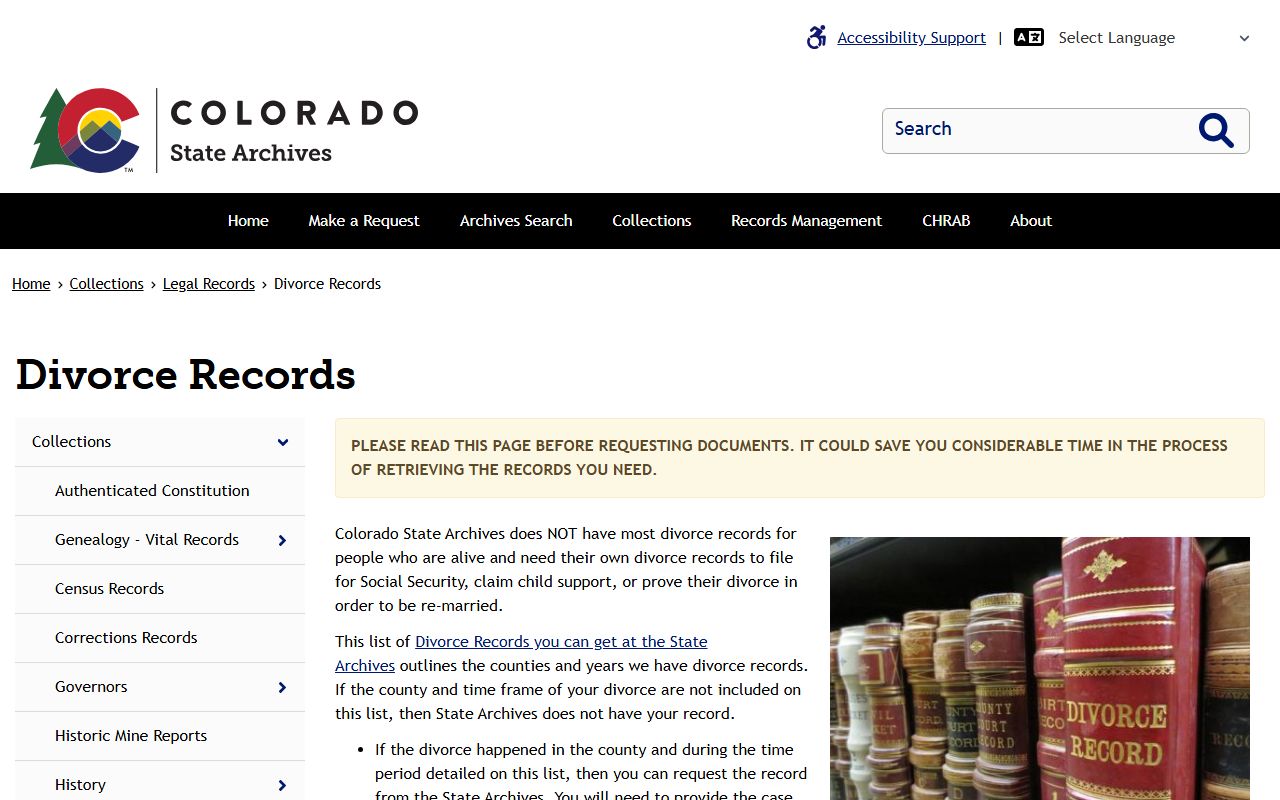
For historical cases, the Colorado State Archives holds divorce records from select counties and time periods. These include Adams County cases from 1904 to 1992, Boulder County from 1867 to 1995, and Denver County from 1862 to 1942. Most archived divorce records are restricted for 100 years from the date of filing. If the county and year match what the Archives holds, you can request copies through their online portal at archives.colorado.gov/archives-search. For all other cases, go to the District Court in that county.
The Colorado Department of Public Health and Environment can verify that a divorce occurred but does not provide decree copies. They only offer divorce verification for purposes like Social Security benefits or remarriage. To get the actual decree with custody orders, property terms, and support amounts, contact the District Court Clerk where the case was filed in Colorado.
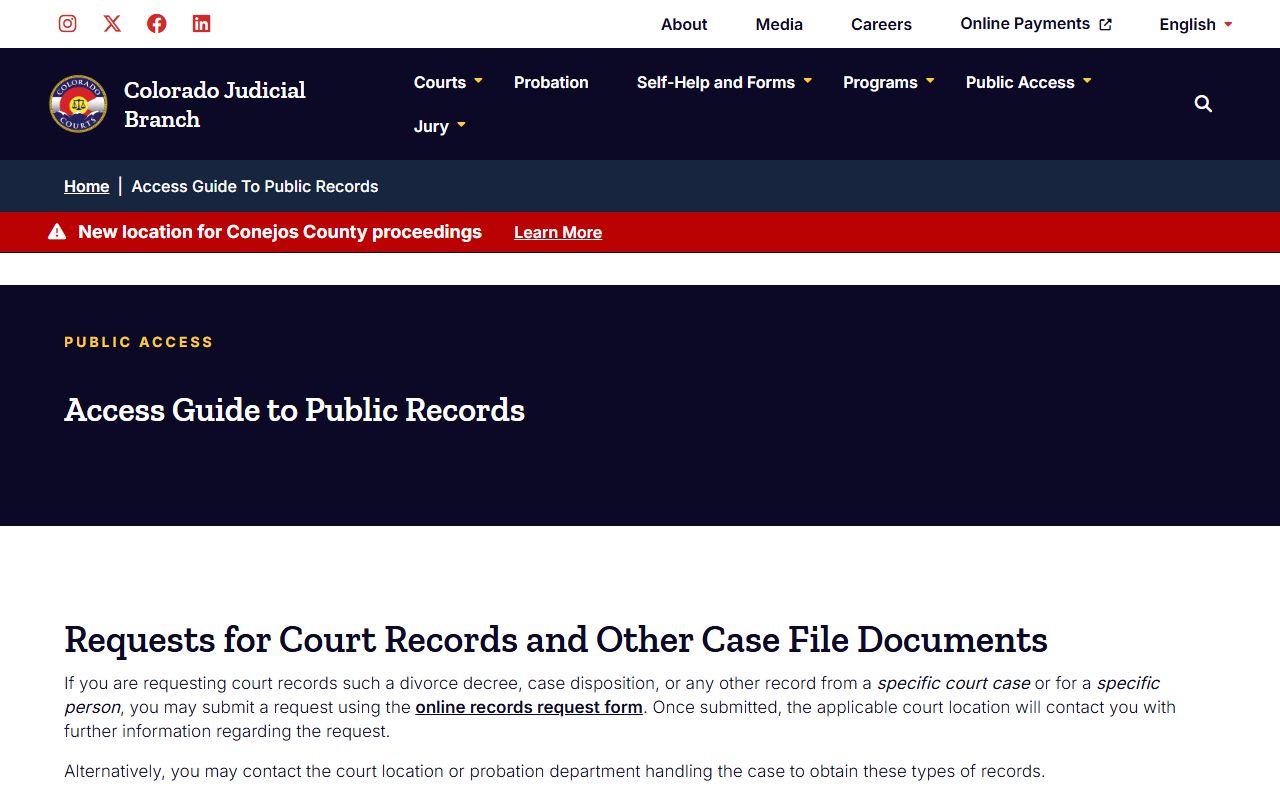
You can submit a records request using the online records request form at the Colorado Judicial Branch website. Select the county and case type, then provide the names or case number. The court will contact you with fee information and processing time. Most courts respond within three business days.
Search Divorce Decrees Online
CoCourts.com offers the most comprehensive online access to Colorado divorce records. This database covers all 64 counties and provides real-time case information from District Courts statewide. You can search by name or case number to find dissolution of marriage cases. Each search costs $10.00 or less and returns a Register of Action showing case filings, hearings, and the final decree date.
The Register of Action does not include document images. You will see dates and case activity but not the decree itself. To get a copy of the actual decree, contact the court directly after finding the case on CoCourts.com. The site helps you locate the right case and county before making a formal records request. Visit cocourts.com to start searching Colorado divorce decree records now.
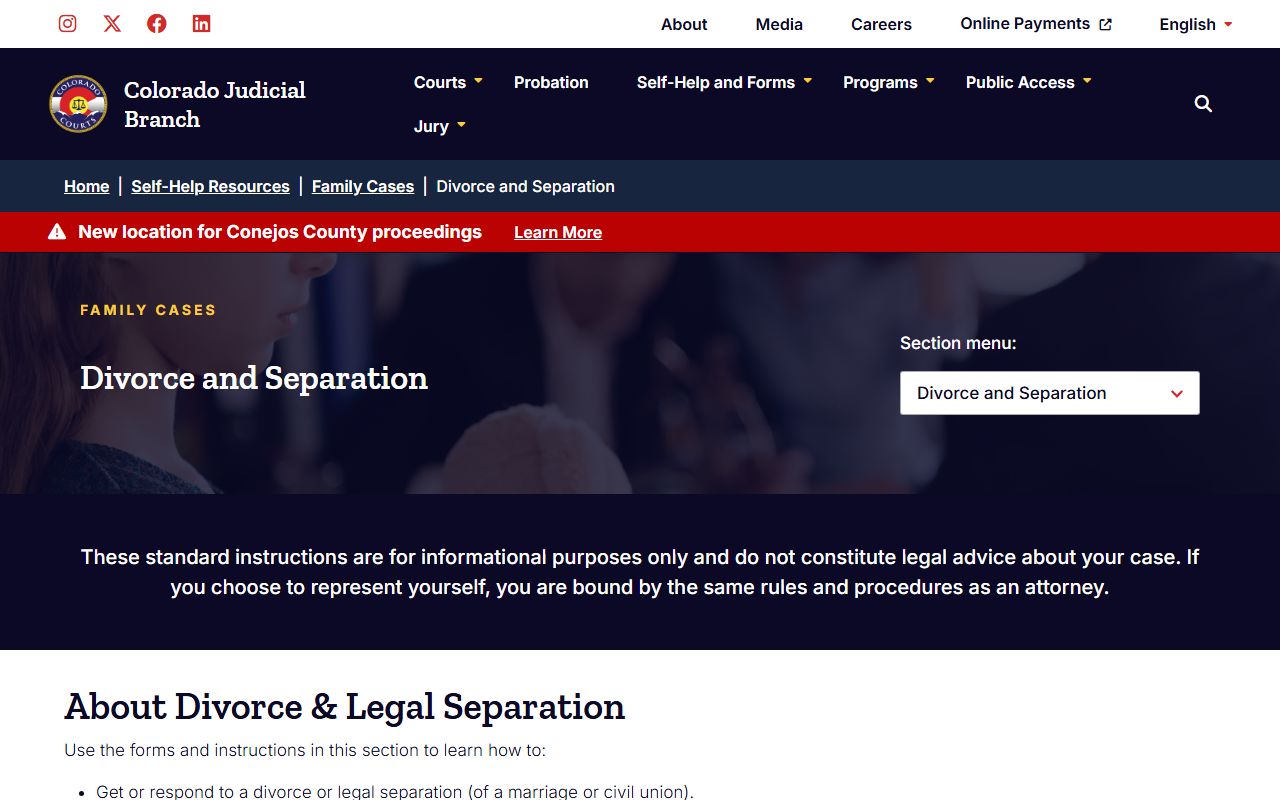
Some counties offer local online case search systems. Denver County provides case lookup through their court website. El Paso County has an e-filing portal where parties to a case can view documents online. Arapahoe County uses the standard Colorado Judicial Branch records request system. Check with the specific county court to see what online tools they provide for searching divorce decree records in Colorado.
How to Request Decree Copies
Getting a copy of a divorce decree in Colorado requires knowing which county handled the case. Start by identifying where the divorce was filed. If you were a party to the case, check old court papers for the county name and case number. If you are searching for someone else's decree, use CoCourts.com to find the county and case number first.
Once you know the county, contact that District Court Clerk's office. Most courts accept requests in person, by mail, or through the online records request form. In-person requests at the courthouse often get same-day service. Mail requests take longer but work well if you live far from the court. The online form at coloradojudicial.gov routes your request to the correct court automatically.
Fees for copies vary by county and document type. Under Colorado fee schedules, regular copies cost $0.25 per page. Certified copies cost $20.00 per document. If you are a party to your own divorce case, the maximum fee is $15.00 regardless of page count. Non-parties pay the full per-page rate with no cap. Some courts also charge research fees of $30.00 per hour after the first hour if extensive searching is needed.
You need the following to request a divorce decree copy:
- Full names of both parties in the case
- Approximate date the divorce was filed or finalized
- County where the case was heard
- Case number if available
- Your contact information and payment
Processing times depend on the court's workload. Most counties fulfill requests within three to five business days. Complex requests or archived files may take up to two weeks. Courts that store older records offsite need extra time to retrieve them. Call ahead if you need expedited service in Colorado.
Colorado Dissolution Requirements
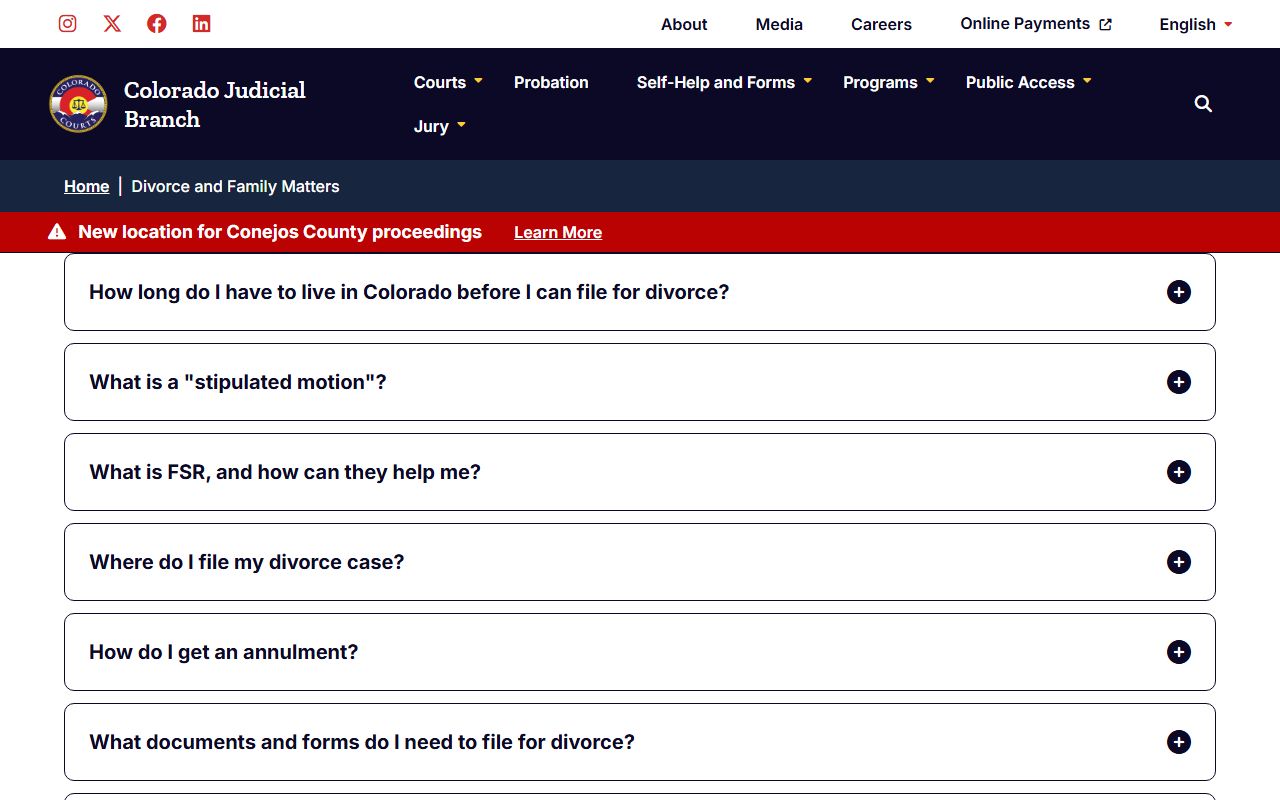
Understanding how divorce decrees are created helps when searching for them. Colorado law sets strict requirements for dissolving a marriage. These rules determine what goes into a decree and how long the process takes. All District Courts in Colorado follow the same statutory framework.
Under C.R.S. § 14-10-106, the court can enter a decree of dissolution when three conditions are met. First, one party must have been domiciled in Colorado for at least 91 days before filing. Second, the court must find the marriage is irretrievably broken. Third, at least 91 days must have passed since the court acquired jurisdiction over the respondent. This 91-day waiting period applies to all dissolution cases in Colorado.
Colorado uses the term "dissolution of marriage" instead of divorce. Both terms mean the same thing. The final decree is the court order that ends the marriage. C.R.S. § 14-10-120 states that a decree is final when entered, subject to appeal rights. The clerk must notify the state vital statistics office when a decree is entered. This creates the verification record at the Colorado Department of Public Health and Environment.
Some cases can be finalized without a court appearance. C.R.S. § 14-10-120.3 allows decrees to be entered by affidavit when certain conditions exist. Both parties must agree, there can be no minor children or pregnancy, and all property issues must be resolved. Courts use form JDF 1018 for these uncontested dissolutions. The decree is still a public record even when entered without a hearing.
What a Divorce Decree Shows
A Colorado divorce decree is a comprehensive legal document. It resolves all issues between the spouses and has the force of a court order. Both parties must follow the terms set out in the decree. Violating a decree can result in contempt of court charges.
Every decree includes basic case information. This covers the full legal names of both spouses, the case number, the court that heard the case, and the date the decree was entered. The decree states that the marriage is dissolved and that both parties are free to remarry. It also notes whether either party restored a former name.
Property division terms take up much of the decree. Colorado is an equitable distribution state under C.R.S. § 14-10-113. The court divides marital property fairly but not always equally. The decree lists who gets which assets and who pays which debts. Real estate, vehicles, bank accounts, retirement plans, and personal property are all addressed. Each item is assigned to one spouse or the other.
A typical Colorado divorce decree contains:
- Names and addresses of both parties
- Date and place of marriage
- Names and birth dates of minor children
- Parental responsibilities allocation
- Parenting time schedule
- Child support amount and payment terms
- Maintenance (alimony) if awarded
- Division of all property and debts
- Insurance and benefit provisions
- Restoration of former name if requested
When children are involved, the decree includes detailed custody and support orders. Colorado uses the term "allocation of parental responsibilities" instead of custody. The decree states who makes major decisions for the children and how parenting time is divided. Child support follows state guidelines based on both parents' incomes. The decree sets the monthly amount, payment method, and duration of support.
Filing and Copy Fees
Costs for divorce decrees in Colorado vary by what you need. Filing a new dissolution case costs $230.00 in most counties. This includes the displaced homemaker fee required under C.R.S. § 14-10-120.5. The respondent pays $116.00 to file an answer. These fees go to the District Court Clerk when papers are submitted.
Getting copies of an existing decree costs much less. Regular copies are $0.25 per page. A typical decree runs 10 to 20 pages, so expect to pay $2.50 to $5.00 for a plain copy. Certified copies cost $20.00 per document regardless of length. You need a certified copy for most legal purposes like changing your name at the DMV or proving marital status to remarry.
Some courts charge name search fees. If you do not have a case number, the clerk may charge $5.00 to search their index by party name. Research fees of $30.00 per hour apply when a request takes significant time to fulfill. These fees are assessed in 15-minute increments after the first hour. Courts also charge off-site retrieval fees if your case is stored at a remote facility.
Fee waivers exist for low-income filers. You can request that the court waive filing fees by submitting a motion to file without payment. The judge reviews your financial information and decides whether to grant the waiver. Waivers apply to filing fees but not always to copy fees or service costs in Colorado.
Public Access to Decrees
Divorce decrees are public records in Colorado. Anyone can request a copy from the District Court. You do not need to be a party to the case. You do not need to state a reason for your request. Courts must provide access under Colorado public records laws.
Some information may be restricted or redacted from public copies. Financial account numbers are typically blacked out. Details about minor children may be limited to protect their privacy. Social Security numbers are not shown on public copies. A party can also ask the court to seal their entire case file. Sealed records are not available to the public without a court order.
Certain types of dissolution cases have extra privacy protections. Cases involving domestic violence may have addresses or contact information removed from public records. Cases where a party is in a witness protection program can be sealed entirely. These situations are rare, and most divorce decrees remain fully accessible to anyone who requests them in Colorado.
The Colorado Judicial Branch limits online access to full documents. While some case information appears in online searches, actual decree images are not posted publicly. You must request copies from the court to get the full text of a decree. This policy balances public access with privacy concerns for sensitive family matters.
Help Finding Divorce Decrees
Legal aid organizations can help if you need assistance obtaining a divorce decree. Legal Services Corporation has offices throughout Colorado. They provide free help to low-income residents with family law matters. Call (866) 456-4995 to find the office serving your county. Spanish speakers can reach help at (888) 835-3505.
The Colorado State Bar runs a lawyer referral service. Call 1-800-392-5660 to connect with a family law attorney in your area. The first consultation costs up to $50 for 30 minutes. This can help if you face difficulty getting records from a court or need legal advice about a decree.
Colorado Legal Help at coloradolegalservices.org offers self-help resources. The site has guides for requesting court records and understanding divorce decrees. You can find contact information for every District Court in Colorado. The site also explains what to do if a court denies your records request.
Each District Court has a Self-Help Center with free resources. Staff can show you how to fill out records request forms. They can explain court procedures and fee schedules. Self-Help Centers cannot give legal advice but can help you navigate the records request process in Colorado.
Archived Divorce Records
The Colorado State Archives holds historical divorce records from specific counties and years. Not all counties have transferred records to the Archives. Not all years are available even for counties that have. You must check whether the Archives holds the specific case you need before submitting a request.
Divorce records at the Archives are restricted for 100 years from the date of filing. Cases over 100 years old are fully accessible to anyone. Cases less than 100 years old require proof that you are a party to the case or an authorized representative. You need a government-issued photo ID to access restricted records.
Counties with divorce records at the Archives include Adams, Arapahoe, Boulder, Denver, El Paso, and several others. The years vary widely by county. For example, Adams County records span 1904 to 1992, while El Paso County only has 1903 to 1941. A complete list appears on the Archives website at archives.colorado.gov. If your case is not on this list, contact the District Court in that county instead.
To request archived records, use the Archives Search database to find the case number first. Then submit a formal request through their online system at archives.colorado.gov/request. Include the case number, county, and year. Requests can take up to 10 business days to process once payment and ID are received. The Archives is located at 1313 Sherman St., Room 1B-20, Denver, CO 80203.
Browse by County
Each of Colorado's 64 counties maintains its own divorce decree records at the District Court. Select a county below to find contact information, fees, and local procedures for obtaining divorce decrees in that area.
Major Cities
Residents of Colorado cities file for dissolution at the District Court in their county. Choose a city below to learn which court handles divorce decrees for that area.