
La Plata County Divorce Decree Records
Divorce decree records for La Plata County are held by the 6th Judicial District Court in Durango. The court maintains all dissolution of marriage files for cases filed in the county. You can search for case information using online databases or request official copies from the clerk's office. La Plata County serves the Durango area and surrounding communities in southwestern Colorado. The court handles both current and historical divorce cases from the county. Anyone seeking a divorce decree must know the case number or the names of both parties to the divorce. Most records are public, but some information may be protected by court order for specific legal reasons.
La Plata County Quick Facts
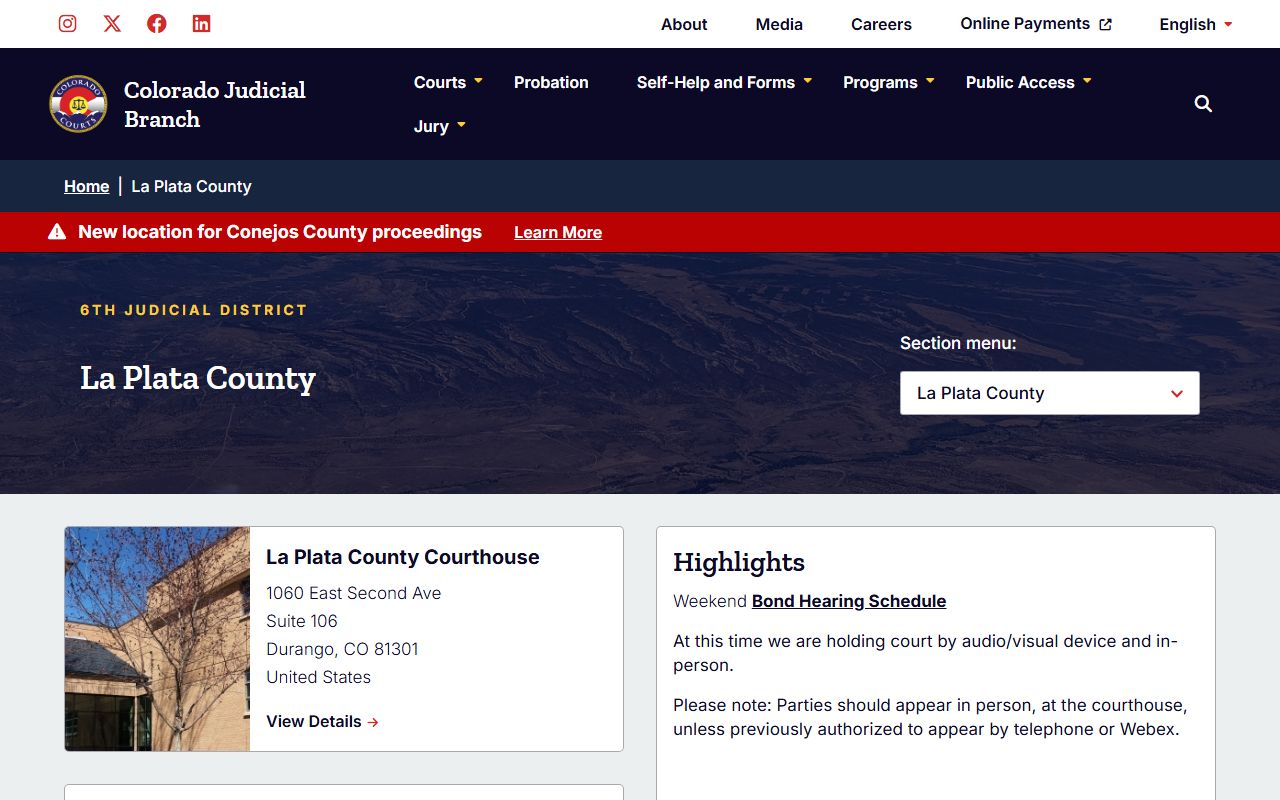
La Plata District Court Location
The 6th Judicial District serves La Plata County along with Archuleta and San Juan counties. Court offices for La Plata County are in Durango at the county courthouse. All family law cases including divorce get filed here. The clerk's office can help you locate case files and explain how to request certified copies of divorce decrees. Hours run from morning until late afternoon on weekdays. You may want to call ahead to confirm office hours and ask what documents you need to bring.
In-person visits work well for complex cases or when you need records quickly. The clerk can search by name if you do not have a case number. This takes more time but helps when you only know one party's name. Bring identification in case the file is sealed or contains protected information. Most divorce records are public, but judges can restrict access in certain situations involving domestic violence or child safety.
Visit the La Plata County Court page for contact details and office hours. The court website provides current phone numbers and addresses. You can also find links to online forms for record requests.
How to Request Divorce Decrees
Start by searching for your case on CoCourts.com, an online database run by LexisNexis. You can search by name for $10 or less. The site shows the register of actions, which lists all filings and court orders in the case. This helps you get the case number. Once you have the number, submit a formal request through the Colorado Judicial Branch online records request form. The form routes your request to the right court.
La Plata County staff will respond with instructions on how to pay and when to expect your documents. Certified copies cost $20 per document. Regular photocopies are $0.25 per page. If you were a party to the divorce, your total fee is capped at $15 no matter how many pages you need. This rule comes from the state's fee schedule set by Chief Justice Directive 06-01. The cap helps people get their own records without high costs.
You can also mail your request to the courthouse in Durango. Include the names of both parties, the approximate date of the divorce, and your contact information. A check or money order should cover the estimated fees. The court will contact you if more payment is needed. Processing time varies based on how busy the clerk's office is and whether files need to be pulled from storage.
Background Information Services and Tessera Data also offer court record searches. BISI serves both individuals and businesses. Tessera works with businesses only. Both pull data from Colorado courts and may have different pricing structures.
Note: Name searches cost $5 if you do not have the case number.
Colorado Divorce Legal Requirements
Colorado law requires one spouse to live in the state for at least 91 days before filing for divorce. This residency rule appears in C.R.S. § 14-10-106. You file in the county where either spouse lives. Most La Plata County residents file in Durango even if they work or spend time elsewhere. The petition starts the case and triggers automatic temporary orders that prevent both parties from selling property or moving children out of state without permission.
After filing, the court waits 91 days before entering a final decree. No divorce can be finalized faster than this waiting period. The law gives both parties time to work out issues like property division, debt allocation, and parenting plans. Some couples settle everything through negotiation or mediation. Others need a trial if they cannot agree on major issues. The judge makes the final decisions at trial based on evidence and testimony.
When both parties agree on all terms and there are no minor children involved, Colorado allows the divorce to proceed without a court hearing. You file an affidavit for decree without appearance as outlined in C.R.S. § 14-10-120.3. The judge reviews the paperwork and signs the decree if everything meets legal requirements. This saves time and court resources in straightforward cases.
Contents of a Divorce Decree
A La Plata County divorce decree shows the names of both parties and the date of marriage. It states the date the marriage was dissolved. If there are minor children, the decree includes custody arrangements and parenting time schedules. Child support amounts get spelled out with payment details. The decree divides all marital property and debts between the spouses. This covers real estate, vehicles, bank accounts, retirement funds, and personal belongings.
Spousal maintenance may be ordered in some cases. The decree will state how much, how often, and for how long payments continue. Health insurance and tax issues often appear in the final order as well. Both parties get a certified copy when the judge signs it. Under C.R.S. § 14-10-120, the decree is final when entered but either party can appeal within the time allowed by court rules.
The clerk sends notice to the Colorado Department of Public Health and Environment after each divorce. The state keeps vital statistics but does not store actual copies of decrees. CDPHE can verify that a divorce happened but cannot provide copies of the court documents. For copies, you must contact the District Court.
Online Database Access
CoCourts.com provides search access to La Plata County divorce cases. The database updates in real time from court systems. You can see case filings, hearings, and final orders. The register of actions lists each document filed in the case. You cannot view the actual documents through CoCourts. It only shows a summary of what happened in the case and when.
Background Information Services and Tessera Data also offer court record searches. BISI serves both individuals and businesses. Tessera works with businesses only. Both pull data from Colorado courts. They provide similar information to CoCourts but may have different pricing structures. For actual document copies, you still need to contact the court directly.
Filing a Divorce in La Plata County
You can file your own divorce without hiring a lawyer. The Colorado Judicial Branch provides free forms and instructions on its website. Form JDF 1011 is the petition for dissolution of marriage. Form JDF 1015 is the response if you are replying to a petition. Form JDF 1019 is the final decree. Step-by-step guides explain how to fill out each form and what to file with the court.
The filing fee for a divorce petition in Colorado is $230. This includes the displaced homemaker fee required under state law. If you cannot afford the fee, you can ask the court to waive it by filing a motion to file without payment. The judge decides based on your income and expenses. Filing a response costs $116.
After filing, you must serve the other party with copies of the petition and summons. Colorado law sets out service requirements in detail. You cannot serve the papers yourself. A friend, professional process server, or sheriff can do it. Proof of service must be filed with the court to show the other party received notice. The court cannot proceed without proper service.
Archived Divorce Records
Older divorce cases from La Plata County may be held at the Colorado State Archives. The Archives stores historical court records from many counties. Not all years are available. You need to check with the Archives to see what they have from La Plata County. Most recent cases remain at the District Court in Durango.
If the divorce happened more than 100 years ago, the file is fully open to the public. More recent archived cases have restricted access. You may need to prove your relationship to the parties or show a legitimate reason for needing the records. The Archives staff can explain their holdings and how to submit a formal request.
Privacy and Sealed Records
Most divorce decrees in Colorado are public records. Anyone can request copies by following the proper procedures and paying the fees. Some cases have sealed portions to protect sensitive information. Cases involving domestic violence, child abuse, or financial account details may have restricted access. Judges can seal files or redact information based on motions filed by the parties.
Under C.R.S. § 25-2-117, vital statistics records are confidential. Only people with a direct and tangible interest can get certified copies. This includes the parties themselves, their lawyers, or anyone with a court order. The law balances public access with personal privacy concerns.
Nearby Counties
La Plata County borders Archuleta County to the east and Montezuma County to the west. San Juan County lies to the north. If your divorce was filed in one of these counties instead of La Plata, you need to contact that county's District Court. Each court maintains its own records and has its own procedures for releasing copies.
The 6th Judicial District covers La Plata, Archuleta, and San Juan counties. Other nearby counties belong to different judicial districts. Make sure you know which county handled your case before requesting records.