
Longmont Divorce Decree Search
Longmont divorce decree records are filed at two different District Courts since the city spans both Boulder County and Weld County. Most of Longmont sits in Boulder County where cases go to the 20th Judicial District Court in Boulder. A small part of the city extends into Weld County under the 19th Judicial District Court in Greeley. When you file for divorce in Longmont, the court you use depends on which county your home address falls in. Both courts use the same Colorado dissolution of marriage laws, but you must file in the county where you live. To search for Longmont divorce decree records, check with the District Court Clerk in the county where the case was filed or use the online CoCourts system that covers both counties.
Longmont Quick Facts
Which Court Handles Longmont Divorce Cases
Longmont sits in two counties. Most of the city is in Boulder County. A smaller part is in Weld County. For divorce cases, you file at the District Court in the county where you live. You cannot choose which court to use. If your address is on the Boulder County side, you file with the Boulder County Combined Court in Boulder. If you are on the Weld County side, you file with the Weld County Combined Court in Greeley.
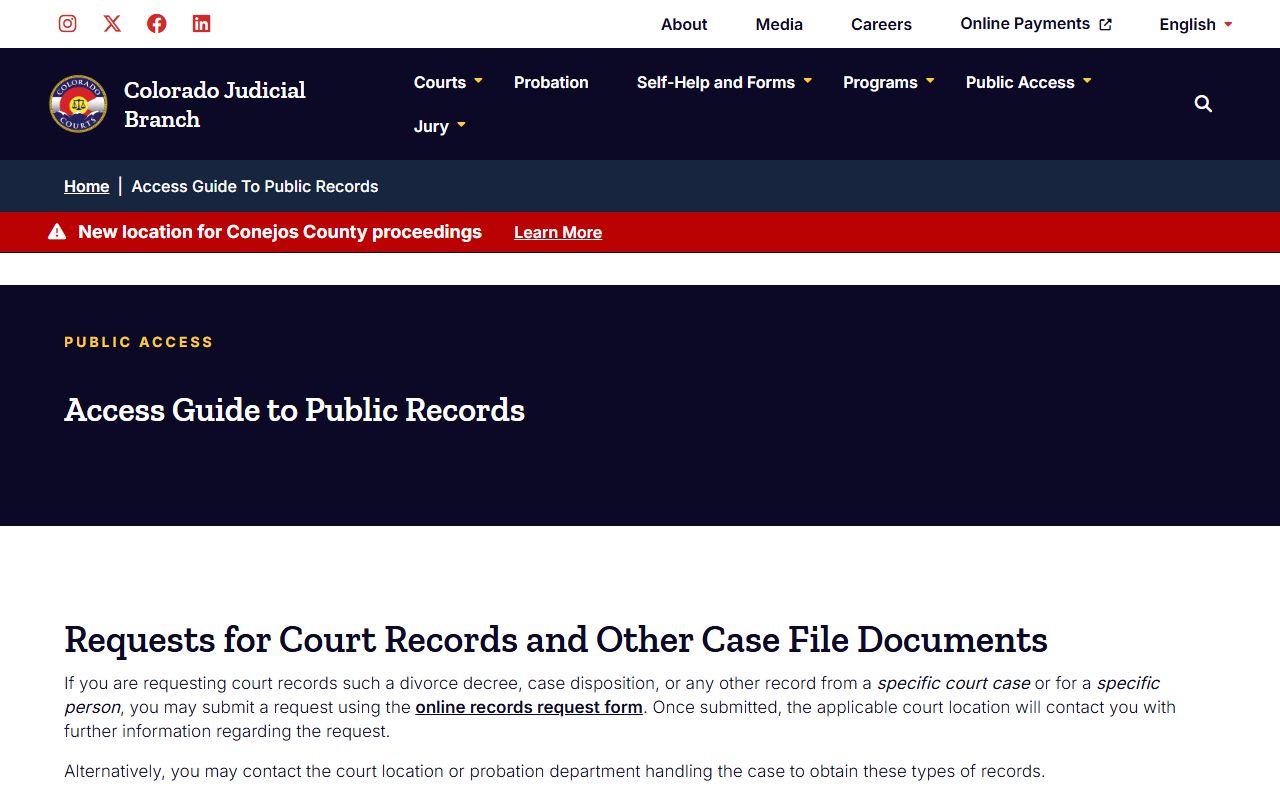
Most Longmont residents file in Boulder County. That courthouse sits at 1777 6th Street in Boulder, about 15 miles from Longmont. Hours are 8:00 a.m. to 5:00 p.m. Monday through Friday. Call (303) 441-3750 to reach the clerk. Visit the court page at www.coloradojudicial.gov/courts/trial-courts/boulder-county for more info on Longmont divorce cases filed in Boulder County.
The part of Longmont in Weld County files in Greeley. That courthouse is at 901 9th Avenue in Greeley, about 25 miles from Longmont. Hours are 8:00 a.m. to 5:00 p.m. Monday to Friday. Call (970) 475-2400 for the clerk. Go to www.coloradojudicial.gov/courts/trial-courts/weld-county to learn about filing divorce cases in Longmont on the Weld County side.
To find out which county you live in, check your property tax records or voter registration. You can also call Longmont City Hall at (303) 651-8374 to ask which county your address falls in for court filing. Do this before you start your divorce case so you file at the right court for Longmont residents.
How to Search Longmont Divorce Decrees
You can search divorce decree records for Longmont through CoCourts.com. This online system covers all Colorado District Courts, including both Boulder and Weld Counties. That means all Longmont cases show up when you search. A name search costs $10 or less, and you get the register of action for the case. The register lists all filings, motions, hearings, and orders. It does not give you full copies of the divorce decree or other documents. For those, you ask the clerk.
Visit www.cocourts.com/cocourts/ to start a search. You can look by name, case number, or date range. Longmont divorce cases appear under either Boulder County District Court or Weld County District Court. If you know which county filed the case, search that one. If you do not know, search both. CoCourts updates in real time from the court database, so new Longmont filings appear soon after the clerk enters them.
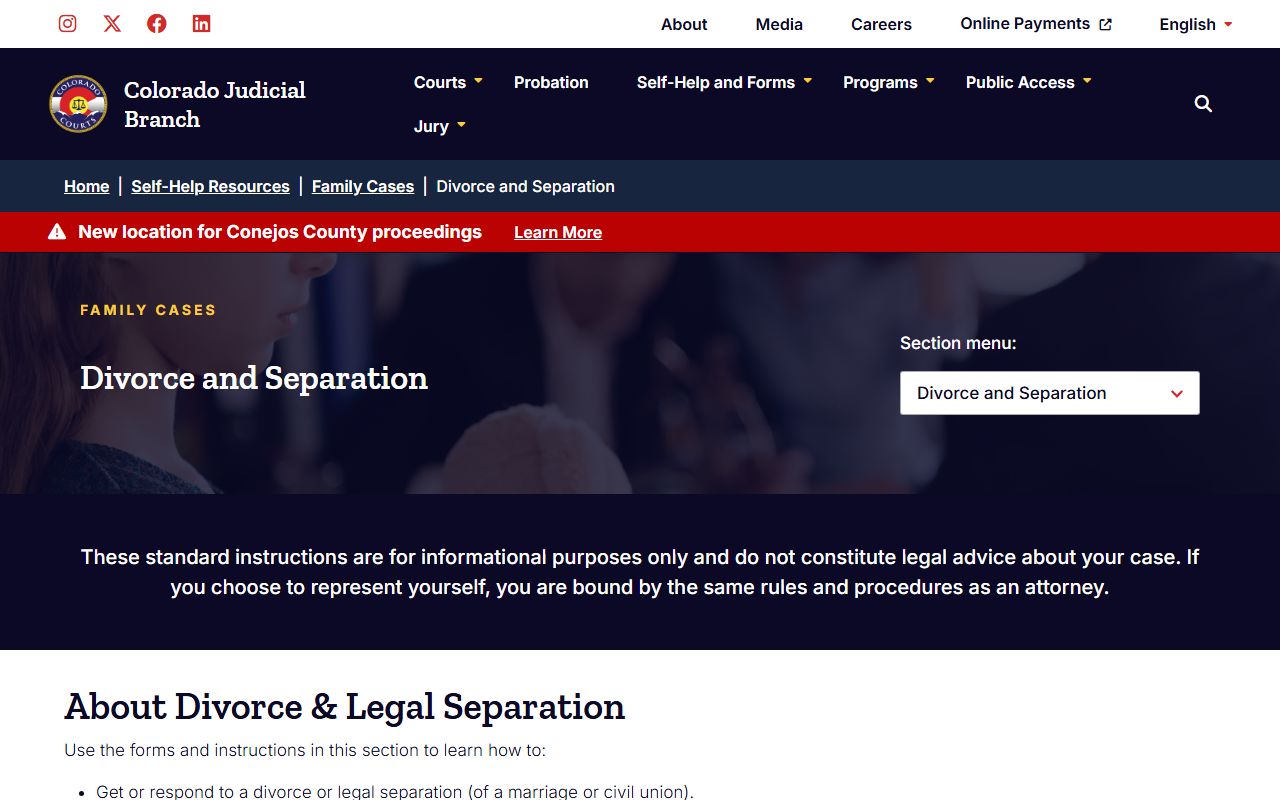
For full document copies in Longmont divorce cases, use the online records request form at www.coloradojudicial.gov/recorddocument-request-form. This is the official form for all Colorado courts. Fill in the party names, case type, and the county where the case was filed. The clerk responds within three days and tells you the cost. You pay $0.25 per page for plain copies. A certified divorce decree costs $20 per document. If you are a party to the case, the max fee is $15 for copies of your own records. This makes it easy for Longmont residents to get their divorce decree after the case ends.
Walk-in searches work at both courthouses. Boulder County is in Boulder and Weld County is in Greeley. Show ID and tell the clerk the names and case number if you have it. Clerks search for free by name and pull up old Longmont divorce cases going back many years. Same-day copies are common if the file is not archived. Archived files may need extra time to retrieve from storage, so call ahead if your Longmont divorce case is old.
Note: Boulder County holds divorce records from 1867 to 1995 at the Colorado State Archives, so very old Longmont cases may require a separate request.
File for Divorce in Longmont
Longmont residents follow Colorado dissolution of marriage law just like the rest of the state. One spouse must live in Colorado for at least 90 days before you can file under C.R.S. § 14-10-106. The court also requires a 91-day wait from the date it gets control over the other spouse before it can sign the final decree. Even fast cases in Longmont take at least three months from start to finish.
File your petition at the courthouse in the county where you live. The filing fee is $230 for a petition for dissolution. This covers the displaced homemaker fund that Colorado requires under C.R.S. § 14-10-120.5. The respondent can file an answer for $116 if they want to dispute terms. If both sides agree on everything, no response is needed and the case moves faster.
Serve the other spouse after you file. You can use a process server, the sheriff, or certified mail in some cases. Proof of service goes to the court. Without it, the case cannot proceed. Boulder County Sheriff charges about $75 for service in Longmont. Weld County is similar. If you cannot find the other person, you may ask the court for service by publication in a Longmont newspaper, but this takes extra steps and time.
Colorado uses no-fault divorce rules under C.R.S. § 14-10-110. This means Longmont residents only need to say the marriage is "irretrievably broken." No proof of wrongdoing is needed. You do not have to show adultery, abuse, or other fault. The court grants the divorce if you meet the residency and waiting period rules. This keeps Longmont divorces simpler than in fault-based states.
If both sides agree on all terms, you submit a separation agreement to the court. This covers property division, debt allocation, child custody if applicable, and support. The judge reviews it and signs the final decree if the terms are fair. Most Longmont divorces with full agreements finish within 90 to 120 days. Contested cases take longer and may go to trial if settlement talks fail.
Forms for Longmont Divorce
All Longmont divorce forms come from the Colorado court system. There are no city-specific forms. Download them free at www.coloradojudicial.gov/self-help-forms. Look for the JDF 1000 series for family law. Each form has instructions on how to complete it.
Main forms for Longmont residents:
- JDF 1010 - How to File for Divorce
- JDF 1011 - Petition for Dissolution of Marriage
- JDF 1015 - Response to Petition
- JDF 1018 - Affidavit for Decree Without Appearance
- JDF 1019 - Final Decree
- JDF 1102 - Summons for Dissolution of Marriage
If you have kids, add child support forms. Colorado uses worksheets based on income and parenting time to figure support. Get these from the court website under family law. You need them filled out before the judge signs your Longmont divorce decree. Missing forms delay the case and may require extra trips to the courthouse.
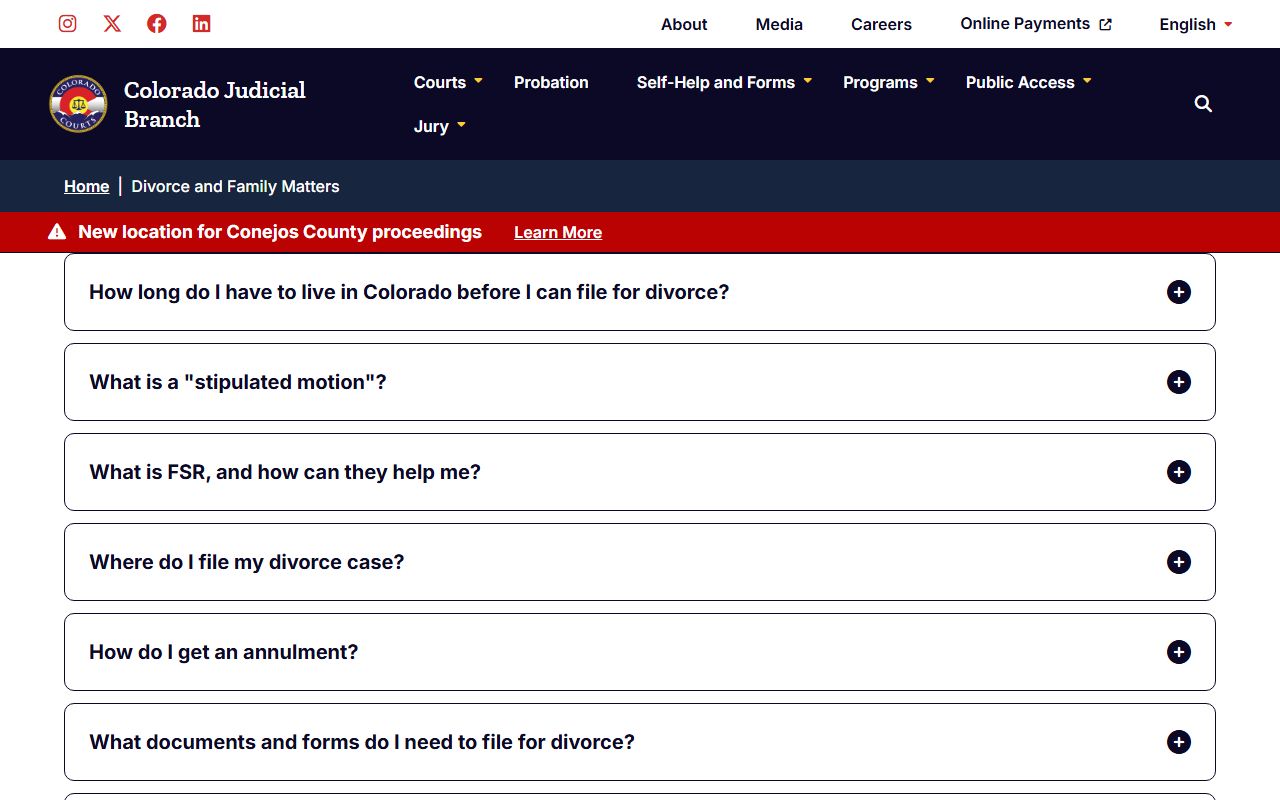
Both Boulder and Weld Counties offer e-filing for some family law forms. Not all forms can be e-filed. Check the court page for the current list. There is a small tech fee on top of regular court fees when you e-file. You get email confirmation when the clerk accepts your filing, which is faster than mailing papers to the courthouse from Longmont.
Legal Help for Longmont Residents
Longmont residents have access to free and low-cost legal help through groups that serve Boulder and Weld Counties. Colorado Legal Services is the main group for free aid if you have low income. They focus on cases with domestic violence or child safety issues. Call (303) 837-1313 for the Denver metro office or (970) 482-0644 for the Fort Collins office that serves Weld County. Visit www.coloradolegalservices.org to see if you qualify. Longmont residents who live on either side of the county line can call for help.
The Colorado Bar Association runs a lawyer referral service at 1-800-392-5660. You get matched with a family law attorney near Longmont. The first meeting is often free or at a reduced rate. This helps you decide if you want to hire that lawyer for your case. Most attorneys who take referrals know Boulder or Weld County court procedures well.
Self-help centers sit in both county courthouses. Boulder County has one at the Boulder courthouse. Weld County has one in Greeley. These centers give forms, answer basic questions, and show you how to fill out papers for your Longmont divorce. They do not give legal advice or represent you in court. Walk in during court hours at either location if you are filing without a lawyer.
For online guidance, visit www.courts.state.co.us/Self_Help/divorce/ for step-by-step instructions on filing without a lawyer. The site explains each phase of a Longmont divorce case and helps you fill out forms correctly. It is free and covers procedures used in both Boulder and Weld Counties.
Divorce Costs in Longmont
Longmont divorce cases cost the same as any other Colorado dissolution. The filing fee is $230 for the petition. This fee applies in both Boulder and Weld Counties. If the other side files a response, that costs $116. Motions and other filings during the case may add more fees. Call the clerk at (303) 441-3750 for Boulder County or (970) 475-2400 for Weld County to get current fee info before you file in Longmont.
Service of process costs extra. The sheriff charges about $75 in both counties. Private servers may charge more or less. If you use certified mail, that is cheaper but only works if the other person signs for it. Failed service means you pay again for a second try. Longmont residents should budget for service costs on top of the court filing fee.
Copies of divorce decree records in Longmont cost $0.25 per page for plain copies. Certified copies are $20 per document. Name searches cost $5 if done by the clerk. Research or redaction fees run $30 per hour after the first hour, billed in 15-minute chunks. These costs apply whether you file in Boulder or Weld County. Most Longmont residents spend less than $50 to get a copy of their final divorce decree after the case ends.
If you cannot afford the filing fee, file form JDF 205 to request a fee waiver. The judge reviews your income and assets to decide if you qualify. Many Longmont residents with low income get approved. This waives the $230 filing fee and other court costs, but it does not cover lawyer fees or service costs. You still have to serve the other spouse even with a fee waiver in Longmont divorce cases.
Divorce Verification in Longmont
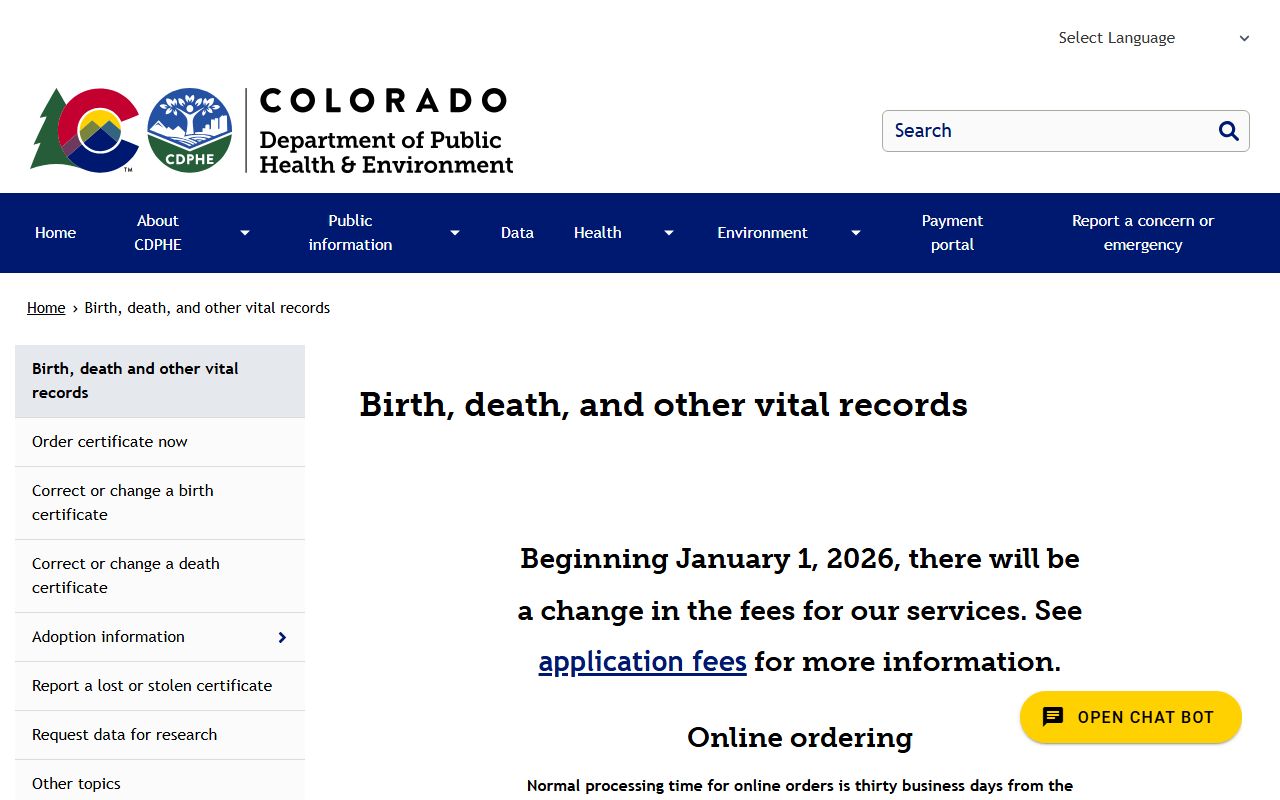
The Colorado Department of Public Health and Environment keeps a record of all divorces in the state. This is not the same as the court decree. It is a vital record that just shows the divorce happened. You get it from the state health office, not the court. Some people use this for proof when they remarry or need to show their Longmont divorce is final.
Order a divorce verification at cdphe.colorado.gov/vitalrecords. You need names, date, and county where the divorce was filed. Longmont cases show up under Boulder or Weld County. The state sends you a certificate that says the divorce is on file. It does not have all the terms like the court decree does. If you need the full decree with property and custody terms, get that from the District Court Clerk in Boulder or Weld County instead.
You can also use VitalChek to order online at www.vitalchek.com. This service adds a fee but delivers faster. Call VitalChek at 866-632-2604 or 866-300-8540 for phone orders. Longmont residents who need quick proof of divorce often use this service when they do not need the full court decree for their purpose.
Longmont County Divorce Resources
Since Longmont sits in two counties, check the resources for both. Boulder County has full info on filing fees, clerk contact, and local rules for the 20th Judicial District. Weld County has the same for the 19th Judicial District. Both pages cover dissolution of marriage procedures that apply to Longmont residents.